A workflow built on fragmentation and fear
Three disconnected surfaces. No shared context. A dental assistant managing clinic supplies had to keep a mental model, or a paper note, just to reorder basics.
The Three-Tab Shuffle
To place a single order, users moved between Dashboard alerts, Inventory settings and Marketplace product pages: three separate contexts with no shared state.
Recall Over Recognition
The purchasing page showed no inventory data. Users had to memorise, or physically write down, minimum stock thresholds before going to the marketplace.
Alarming Dead Ends
Legacy notifications used red text to signal urgency but offered no direct path to action. They created stress without a fix: anxiety with no exit.
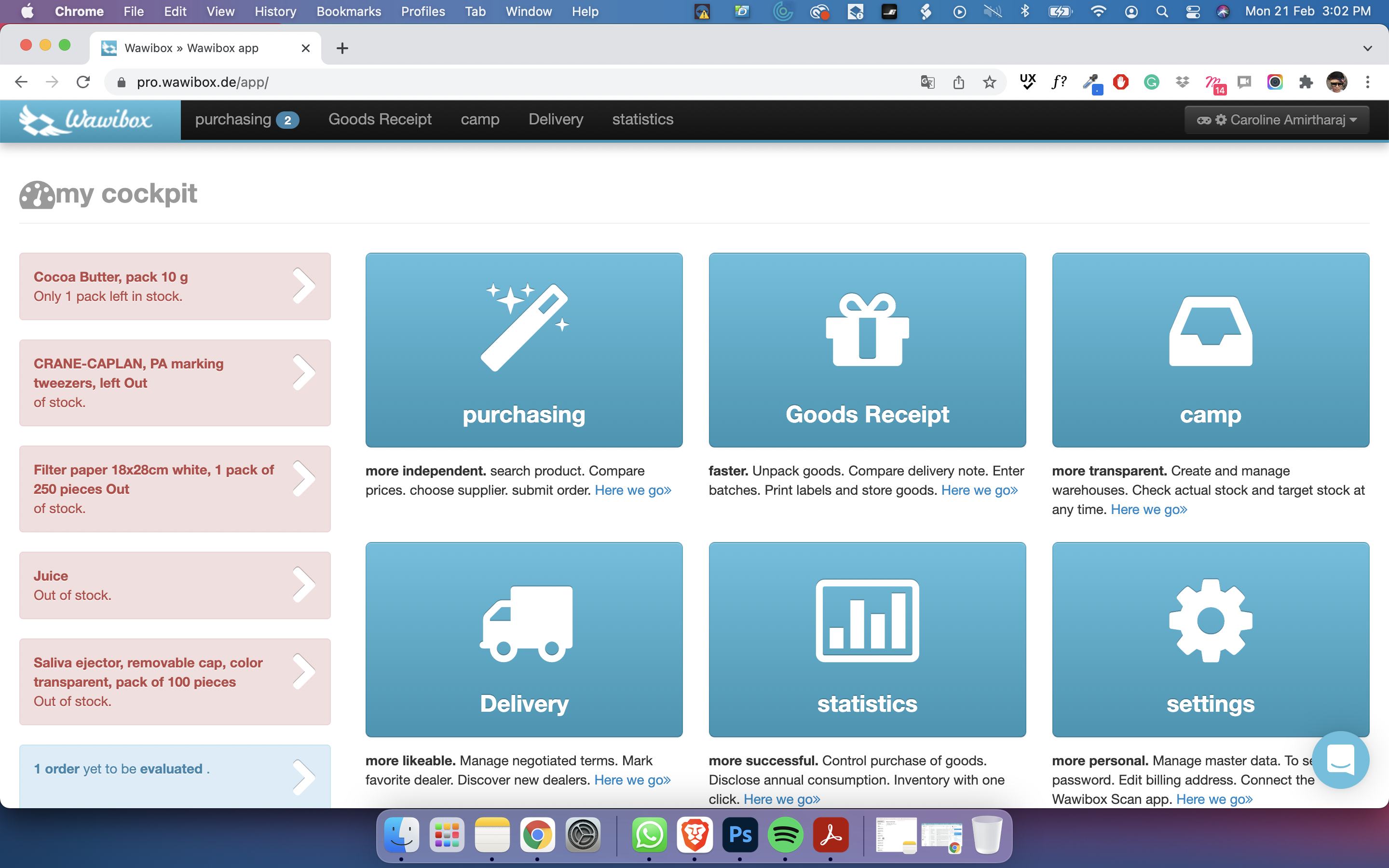
Before: the legacy cockpit, with red alerts disconnected from purchasing.
I keep a sticky note next to my monitor just to remember what I ordered last month. Dental Assistant · User research interview
Three principles to bridge the gap
Before touching a single wireframe, we set the design tenets that would guide every decision, rooted in how the work actually gets done.
Systems Thinking
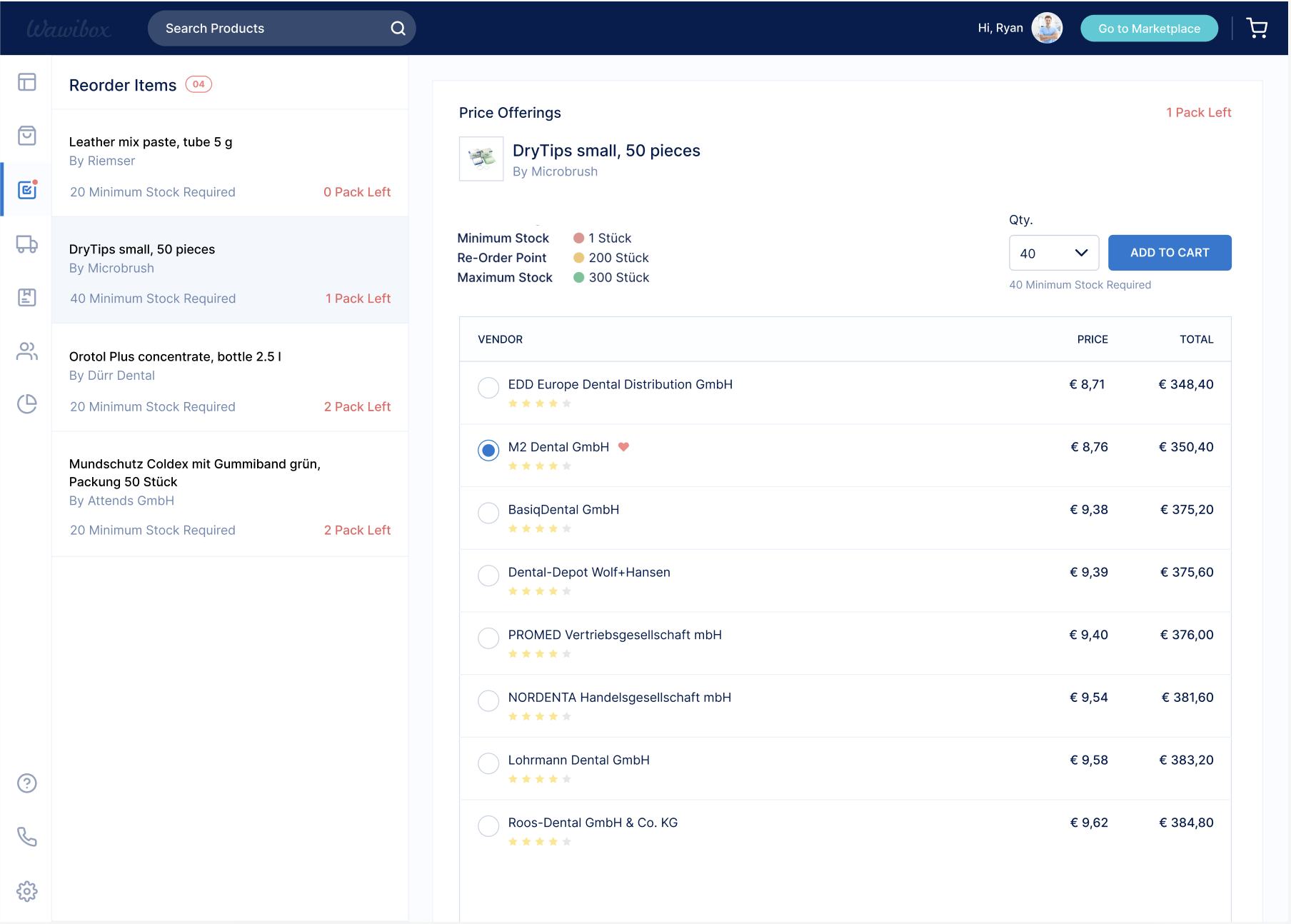
Merged Inventory data (stock levels, min/max thresholds) with Marketplace data (vendor pricing, availability) into a single "Reorder" view. One mental model. One surface to act on.
Recognition over Recall
Brought minimum and maximum stock settings straight into the quantity selector. Users never leave the page to look something up; the system shows what they need, when they need it.
Contextual Personalisation
A Skyscanner-style best-price algorithm picks vendors automatically but respects professional relationships. Users can favourite trusted vendors or filter out ones they avoid.
A checklist with intelligence built in
A master-detail SPA view that treats low stock as a to-do list, with pre-filled quantities, auto-selected vendors and satisfying micro-interactions along the way.
The Checklist UI
Low-stock items appear as one list, sortable by urgency, category or vendor. Each item is a self-contained decision: see the problem and resolve it in one motion.
Smart Defaults
Quantity is pre-filled from the gap between current and required stock. The best-price vendor is auto-selected. Users confirm rather than configure, which carries a very different cognitive load.
Satisfying Micro-interactions
Clearing an item feels like ticking off a to-do. Small, rewarding feedback loops turn a chore into a moment of progress and keep the daily ritual light.
Contextual Vendor Selection
Vendor choice sits right beside the item, with price, rating and favourites visible inline, so switching suppliers never means leaving the flow.
From anxiety to accomplishment
The impact went beyond operations. Moving from reactive to proactive supply management changed how clinic staff felt about their work and their tools.
Fewer touchpoints to complete a full restock order, down from a multi-step, cross-screen workflow.
Manual data-entry steps eliminated. The system pre-fills quantities and vendors.
Error risk from over-ordering or missed supplies sharply reduced through smart defaults.
- Anxiety about running out
- Overwhelm from red alerts
- Frustration with manual lookups
- Stress from split context
- Confidence in supply levels
- Satisfaction of clearing the list
- Trust in smart defaults
- Sense of accomplishment